Fault after a crash rarely falls into clean lines. Most collisions live in the gray where two people made imperfect choices within seconds of confusion. Maybe you checked the mirror but missed the motorcycle in the blind spot. Maybe the other driver ran a stale yellow, and you braked late on worn tires. When you suspect you carry some share of blame, the urge to apologize and “handle it quietly” runs strong. That instinct often costs people real money.
A seasoned accident lawyer doesn’t need perfect facts to help. They need the truth, promptly, and the chance to manage risk before evidence hardens against you. Timing matters, especially if you might be partially at fault. The first 72 hours after a car accident set the tone for everything that follows, from your recovery to your insurance premiums to whether your statements get twisted into admissions.
This is a practical guide, drawn from years of negotiating with adjusters and trying crash cases in court, on when to call a car accident lawyer when your own driving wasn’t flawless.
Why “partial fault” doesn’t end your claim
Many people assume that any fault on their part bars recovery. That belief lingers because the rules vary by state and because adjusters lean into that confusion. Most states use some form of comparative negligence. It works like this: responsibility is divided into percentages and your compensation is reduced by your share. If your total losses were 100,000 dollars and you were 25 percent at fault, your net recovery could be 75,000 dollars, assuming your state allows it.
There are three broad models:
- Pure comparative negligence: You can recover even if you’re 99 percent at fault, reduced by your percentage. Modified comparative negligence: You can recover only if you’re under a fault threshold, typically 50 or 51 percent. Cross that line and you recover nothing. Contributory negligence: A handful of jurisdictions still bar recovery if you were even 1 percent at fault, with narrow exceptions.
That spectrum determines leverage. In a modified comparative state, an insurer will invest heavily in pushing you over the 50 or 51 percent line. Evidence collection, narrative framing, and expert analysis become the difference between some recovery and none. This is one of the reasons a car accident lawyer becomes valuable even when your driving wasn’t pristine.
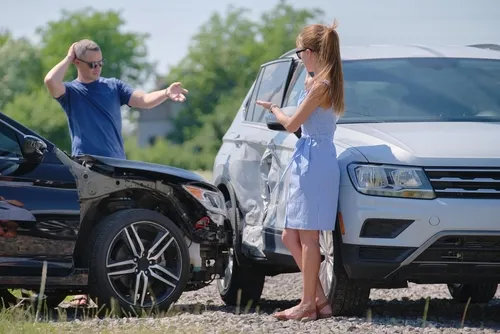
The window that decides the narrative
Contested liability claims turn on small details: skid marks, vehicle resting positions, impact geometry, light timing, camera angles, ECU data, and witness statements shaped by stress. Those details degrade by the hour. Rain washes away debris. Businesses overwrite video in two or three days. Witnesses forget, or worse, they begin to fill gaps with assumptions.
When you might be partially at fault, you do not have the margin to wait. You need someone to freeze evidence while it still exists. An injury lawyer can issue preservation letters the same day, request intersection camera footage before it disappears, secure vehicle data, and hire a reconstruction expert if the stakes warrant it. That early discipline changes everything when the other driver’s insurer tries to script the crash as “mostly your fault.”
Apology culture meets claim culture
After a collision, polite people apologize. It’s reflex. Insurers treat those words as admissions. So do police reports, which often include snippets of roadside chatter. A decent accident lawyer will tell you what to say and what not to say. Describe mechanics, not judgments. “I was traveling about 30, I looked left, the other vehicle entered from the side street.” Avoid phrases like “It was my fault” or “I didn’t see anything.” The difference looks subtle on the page and huge when an adjuster quotes it back as the basis for a 60 percent fault allocation.
If you already apologized, do not panic. Courts understand that people blurt things out under stress. But that’s exactly when a car accident lawyer earns their keep: reframing, contextualizing, and best truck accident lawyer anchoring the claim in physical evidence rather than offhand remarks.
Medical care and the optics of responsibility
Delays in treatment damage both your body and your case. Pain that spikes on day three after a car accident injury is common. Soft tissue swelling peaks later, concussions hide behind adrenaline, spinal issues simmer. Insurers lean on gaps in care to argue your injuries are minor or unrelated. When liability is disputed, that skepticism hardens.
An experienced injury lawyer nudges you to the right kind of evaluation early, often the same day or next day. That might include an urgent care visit, a primary care referral, or specific imaging based on the mechanism of injury. It’s not about inflating a claim. It’s about aligning the medical record with the physics of the crash, which prevents an adjuster from recharacterizing your complaints as “late, subjective, and unreliable.”
The conversation you should avoid with the adjuster
Adjusters are trained to be disarming. They ask for a “quick recorded statement to get your side of the story.” They will sound reasonable. If you think you’re partially at fault, you may feel pressure to cooperate quickly to appear honest. That recorded statement often becomes the blueprint for diminishing your recovery.
A better path: share basic facts required by your policy, then pause. Once you retain a car accident lawyer, the lawyer screens statements, sets boundaries, and schedules them after evidence has been gathered. The order matters. You want the benefit of photos, diagrams, maps, event data, and medical records before you commit your narrative to tape.
The cost question people are shy to ask
Good personal injury lawyers typically work on a contingency fee, usually between 33 and 40 percent, sometimes tiered based on whether the case resolves before or after suit. When you’re partially at fault, you might worry that a fee eats too much of a reduced recovery. The real comparison is not “with fee” versus “without fee.” It is net, after all risk-adjusted outcomes. On average, represented claimants recover more, even after fees, because liability arguments soften under professional pressure, damages are better documented, and liens are negotiated down.
If your claim is truly small and your own fault significant, a candid accident lawyer will say so. The best ones do. Expect them to ask about property damage thresholds, airbag deployment, delta-V estimates from repair invoices, and injury duration. If your injuries resolved in a week with minimal care and the liability picture looks bad, the lawyer may advise a direct insurer negotiation. That candor is part of the value.
Where partial fault hides and how to confront it
Fault allocation is rarely about morals. It’s about rules of the road, reaction time, visibility, and human factors.
Consider these common fact patterns:
- Left turn across traffic: The left-turning driver often bears primary fault, but not always. If the oncoming driver was speeding or ran a new red, a reconstruction can shift the percentages. Rear-end with a twist: Tail-enders usually take the blame. But if the lead car cut in sharply with no signal, had non-functioning brake lights, or braked abruptly for no reason, comparative fault enters. Multi-vehicle chain crashes: Adjusters love to spread fault across everyone. A lawyer will map each impact sequence, assign energy, and identify who set the cascade in motion. Lane change sideswipe: Blind-spot hits are rarely one-sided. Did the other driver accelerate into the space? Was there a hidden taper in the lane? Were temporary cones narrowing the roadway? Intersection with ambiguous control: Four-way stops and flashing signals produce conflicting memories. A single video or a timestamped delivery route sometimes solves what stories can’t.
None of these examples require perfection from you. They require a plan to obtain proof early.
How your own policy fits into this, even if you blame yourself
People forget their own coverage when they think they caused the crash. Several first-party benefits ignore fault or reduce its importance:
- MedPay and PIP: Depending on jurisdiction, these cover medical expenses regardless of fault, up to a limit. They also create a paper trail of timely treatment. Uninsured and underinsured motorist coverage: If the other driver shares fault but lacks adequate insurance, your UM/UIM can step in. Many claims involve both liability and UM elements. Collision coverage: Can repair or total out your vehicle regardless of fault, which preserves evidence and often yields better repair documentation.
A car accident lawyer coordinates these coverages so they complement each other and prevent duplicate payments that later trigger messy clawbacks. They also handle the lien ecosystem, from health insurers to workers’ comp to hospital claims, which directly affects your net.
The perils of waiting, in real numbers
A delay of a week can mean the difference between a 20 percent and a 60 percent fault assessment. That statement comes from the grind of hundreds of files, not from a textbook. Here is why: after seven days, surveillance videos are often gone, the vehicles may be repaired or totaled without a forensic tear-down, and police reports are finalized with errors embedded. If the initial report lists you as primary cause, the burden shifts to you to overturn it. That is far harder than preventing the label in the first place.
In dollar terms, consider a moderate claim with 45,000 dollars in medical expenses and 25,000 dollars in lost time and diminished earning capacity, plus pain and inconvenience commonly valued at 1 to 2 times specials depending on jurisdiction. If liability floats between 30 and 60 percent against you, the swing can shrink or expand the net by tens of thousands. Add modified comparative thresholds and the cliff becomes absolute. That is why the timing of counsel is not a luxury flourish. It is an actuarial decision.
How an attorney reframes partial fault without pretending it doesn’t exist
Jurors and adjusters dislike blame dodging. They respond to ownership and context. A seasoned injury lawyer crafts a narrative that acknowledges what’s fair to acknowledge, then anchors causation in the other driver’s choices.
A practical approach looks like this: you accept that you began a left turn a beat early. Then the analysis shows the oncoming driver was traveling 47 in a 30 zone and had been accelerating for five seconds. The delta-V to your vehicle confirms a high-energy impact inconsistent with a driver who had time to brake. The camera from the pharmacy two doors down shows their headlights emerging from a curve too quickly to yield. Suddenly, your early turn is not the whole story. It is part of a timeline where two mistakes met, and theirs weighed more.
This isn’t sleight of hand. It’s physics plus human factors. Sun angle at 5:12 p.m. in November, wet leaves, sightline blocked by an SUV at the corner, reaction time of 1.5 seconds under surprise conditions. Jurors respect that kind of detail because life works that way.
Talking to your own insurer without harming yourself
Your policy likely requires prompt notice and cooperation. Give it. Provide the where, when, and who. Share the police report number, the tow yard, and the contact information for the other driver. Then stop short of a recorded statement until you’ve consulted counsel. Your aim is to preserve coverage and keep repair or total-loss processes moving without locking yourself into liability concessions. A car accident lawyer threads that needle daily.
Pain, pride, and the impulse to settle fast
After a car accident injury, people want to crash-land the whole ordeal. Take the first offer, pay the deductible, move on. When you believe you were partly at fault, that impulse strengthens. First offers can be a trap. They usually arrive before full diagnosis, before you know whether the hand tingling fades or the lower back stiffens after eight hours at your desk. Accepting early can also release claims you didn’t realize you had, like UM/UIM, or close the door before lien reductions are negotiated.
There is a humane middle path: resolve property damage quickly, secure a rental car, and allow the bodily injury portion to mature with medical clarity. A good accident lawyer moves the property piece fast while slowing the injury piece just enough to understand it.
What to do in the first 24 hours if you think you share blame
Keep this short and practical. It’s the only checklist you need.
- Photograph everything: vehicles, plates, the roadway, your dashboard, the intersection controls, weather conditions, and any visible injuries. Seek medical evaluation: even if you feel “okay.” Document baseline findings within 24 hours. Notify your insurer: provide facts without giving a recorded statement yet. Gather names: witnesses, business managers for camera access, tow operators, and the responding officer’s card. Call a car accident lawyer: ideally the same day or next, before adjusters call you for statements.
When you might not need a lawyer even if fault is mixed
Not every collision warrants legal representation. If you were rear-ended at low speed with no symptoms beyond a day of soreness, had only a bumper cover replaced, missed no work, and live in a pure no-fault PIP state with just a small co-pay, you may handle it with your insurer and move on. If, however, you have any of the following, phone a professional: airbag deployment, visible vehicle intrusion, radiating pain, head strike or confusion, a motorcycle or pedestrian involved, or a commercial vehicle on the other side. Those indicators often correlate with more complex liability and higher damages, where mistakes cost real money.
The litigation edge if negotiations stall
When liability is disputed and offers lag far below your losses, filing suit can reset the table. Discovery compels answers. Subpoenas reach phone records, vehicle telematics, and traffic signal logs. Depositions reveal coaching and contradictions. Trials are rare but preparing for trial is common, and that preparation often moves a file. The mere ability and willingness to try a case changes how an insurer values it. Ask any prospective lawyer how often they go to court and what results they’ve obtained on mixed-fault cases. It matters.
Choosing the right advocate for a mixed-fault claim
Sophistication matters more than swagger. Look for an injury lawyer who:
- Explains comparative negligence in your specific state, with examples. Talks about preserving and analyzing evidence, not just “fighting for you.” Has relationships with reconstruction experts, biomechanical consultants, or human factors specialists when appropriate. Shows you how liens will be reduced and how medical billing will be tackled. Communicates clearly and sets expectations about timelines and decision points.
The best car accident lawyer for a partial-fault case is calm, analytical, and strategic. They will not promise perfect outcomes. They will show you paths and probabilities.
A short story from the trenches
A client once called two weeks after a left-turn collision. She had told the officer she “probably misjudged the gap.” The report listed her as primary cause. The other driver’s carrier offered nothing. We retrieved camera footage from a gas station that barely caught the oncoming lane. A reflection in a window pane showed a streak of headlights moving faster than the ambient flow. We pulled the vehicle data from our client’s car and mapped impact timing. A reconstruction placed the oncoming speed at 44 to 48 in a signed 30. The case settled within policy limits with a 35 percent fault allocation to our client instead of 100. The difference funded a year of physical therapy and made her whole on lost income. She wasn’t blameless. She didn’t need to be.
What luxury looks like in legal service
In a market that tosses slogans at billboards, true luxury is quiet competence. Rapid evidence preservation without drama. Doctors who take your call because your lawyer has earned their trust. A settlement demand that reads like a professional report rather than a PDF of receipts. Weekly updates that respect your time. Transparent fees, clear closing statements, and negotiated reductions that go line by line instead of rounding to “about right.”
That kind of representation turns a vulnerable moment into a controlled process. It will not erase the crash. It will make sure the outcome aligns with the real proportions of responsibility and the real scope of your losses.
The moment to pick up the phone
If you feel even a twinge of doubt about fault, call early. Day zero or day one is ideal. Day three is still workable. After a week, you are playing catch-up. Use that call to gather clarity, not to launch a lawsuit. Ask pointed questions about your state’s negligence rules, evidence preservation, medical documentation, and the plan for statements. You will know within minutes whether you are in capable hands.
Partial fault is not the end of your claim. It is a factor to be managed. With the right accident lawyer, your case becomes a matter of proportion, proof, and timing, not a binary judgment about good drivers and bad. That is the quiet truth that sits beneath the noise of a car accident, and it is yours to act on.